The project “Monitoring the conservation status of the wolf in Slovenia in the 2022/2023 season” represents the fifth iteration of a national-scale effort to assess the status of the wolf population.
Introduction
The project “Monitoring the conservation status of the wolf in Slovenia in the 2022/2023 season” represents the fifth iteration of a national-scale effort to assess the status of the wolf population. Full report in Slovenian language is available here: Portal GOV.SI After a one-year break in 2021/2022 (when systematic nationwide monitoring was not carried out), the monitoring resumed and encompassed the period from November 2022 through June 2023, with additional integration of earlier collected samples.
The goals of the project included:
-
Determining the spatial distribution of wolf presence in Slovenia;
-
Estimating population size, structure (packs, dispersers, immigrants);
-
Assessing hybridisation with domestic dogs, parentage and pedigree relationships;
-
Providing scientifically-robust data to inform conservation management of wolves in Slovenia, particularly given connectivity with transboundary populations (e.g., into Croatia, Italy, Austria).
In this context, DivjaLabs was engaged as one of the subcontractors and played a central role in the molecular-genetic and capture-mark-recapture aspects of the monitoring, contributing to the non-invasive genotyping, hybrid detection, parentage/pedigree reconstructions and population size estimation.
The Process
The monitoring process comprised several linked components: field sampling, laboratory genetics, data analysis (including capture-mark-recapture estimation and pedigree reconstruction). Key steps included:
Sampling materials preparation & collection
-
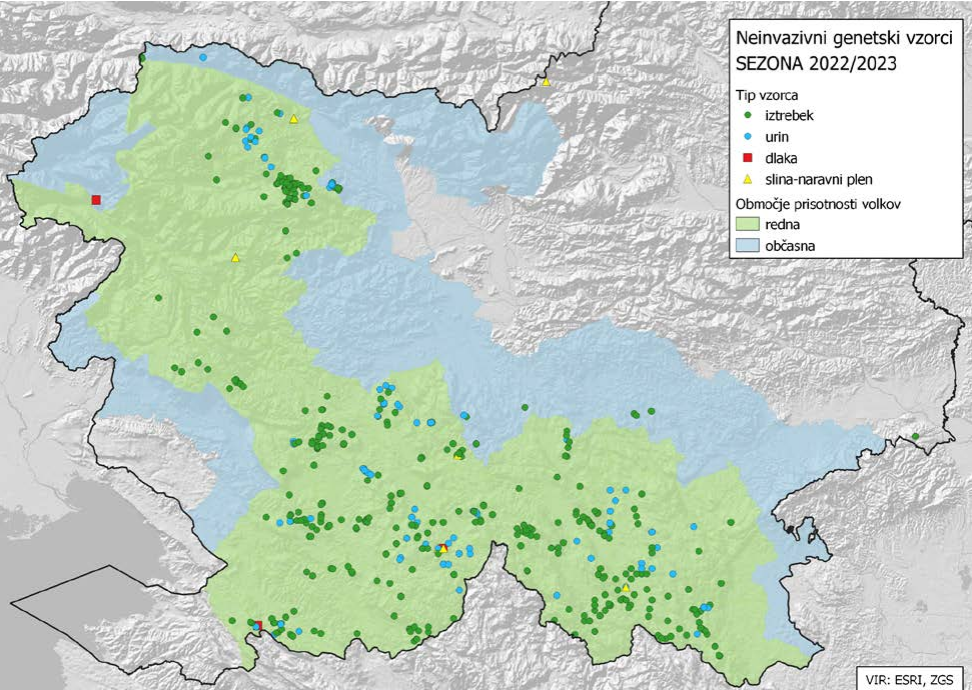
A non-invasive sampling scheme was used: in the 2022/2023 season, a total of 620 non-invasive genetic samples were collected (478 scat samples: 447 successfully analysed; 116 urine: 115 analysed; 22 saliva from prey: 21 analysed; 4 hair samples: 3 analysed).
-
In addition, tissue samples from dead wolves (18 samples), one blood sample from a live-captured wolf (within a telemetry project) and one bone sample from a presumed wolf skull were included.
-
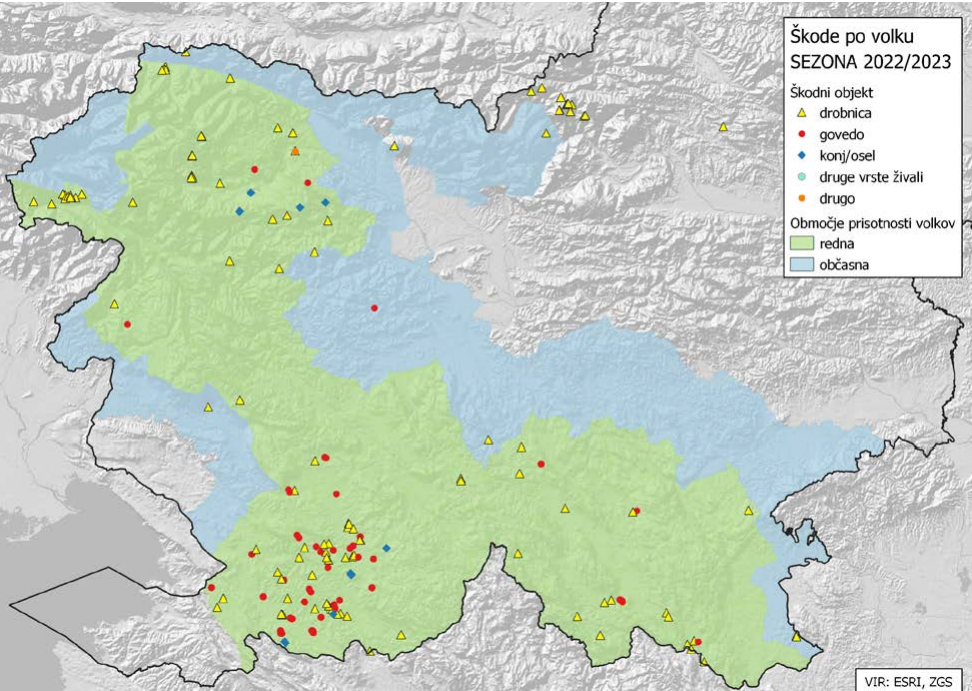
The team also included 50 usable saliva samples from damage-cases (livestock depredation) collected between 1 July 2022 and 30 June 2023 (genotyped via public service funds).
-
DivjaLabs’ responsibilities included preparing the required sampling materials (field kits for scat/urine/hair collection, preserving media, lab‐logistics) as well as performing the genetic laboratory work (individual genotyping, wolf-dog hybridisation analysis, parentage/pedigree analysis).
Genetic analyses & hybridisation detection
-
Genotyping of the collected samples involved standardised methods described in the report: including success-rate checks, filtering of samples, detection of individual identities, sex, and assignment to known individuals.
-
Hybridisation analysis was explicitly performed: in particular, detection of wolf × dog crosses (F1, back-crosses) as part of the assessment of introgression risk.
-
Parentage analysis and pedigree reconstruction enabled identification of packs, reproductive units, dispersal events and immigrants, via linking genotypes across individuals.
Capture-mark-recapture / population size estimation
-
Using the individual genotypes (from non-invasive samples), a capture-mark-recapture (CMR) framework was applied: each unique genotype corresponds to detection (“capture”); repeated detection of same individual constitutes “recapture”. The saturation graph (with each line an individual, each dot a sample) was used to evaluate sampling coverage.
-
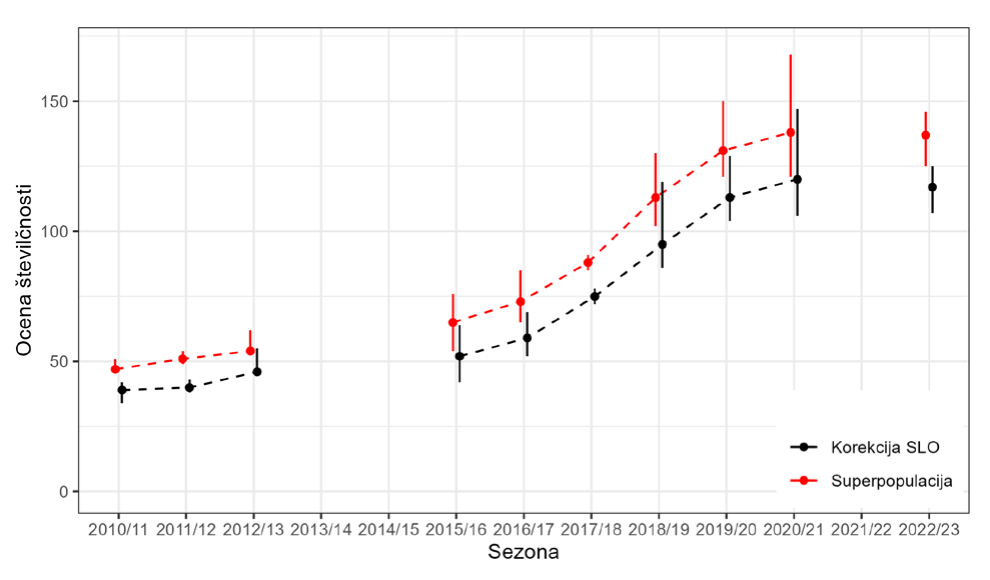
The estimated “super-population” (including transboundary animals) was calculated at ~ 137 individuals (95% CI: 125–146) for the period. After correcting for cross-border packs (i.e., subtracting half of animals in transboundary packs for management purposes), the estimate for Slovenia was ~ 117 wolves (range 107–125).
-
The parentage and pedigree reconstructions also supported delineation of wolf packs (territorial units), identification of immigrants/dispersers, and thus improved estimations of abundance and structure.
Results
The main findings from the 2022/2023 monitoring season include:
Spatial distribution and packs
-
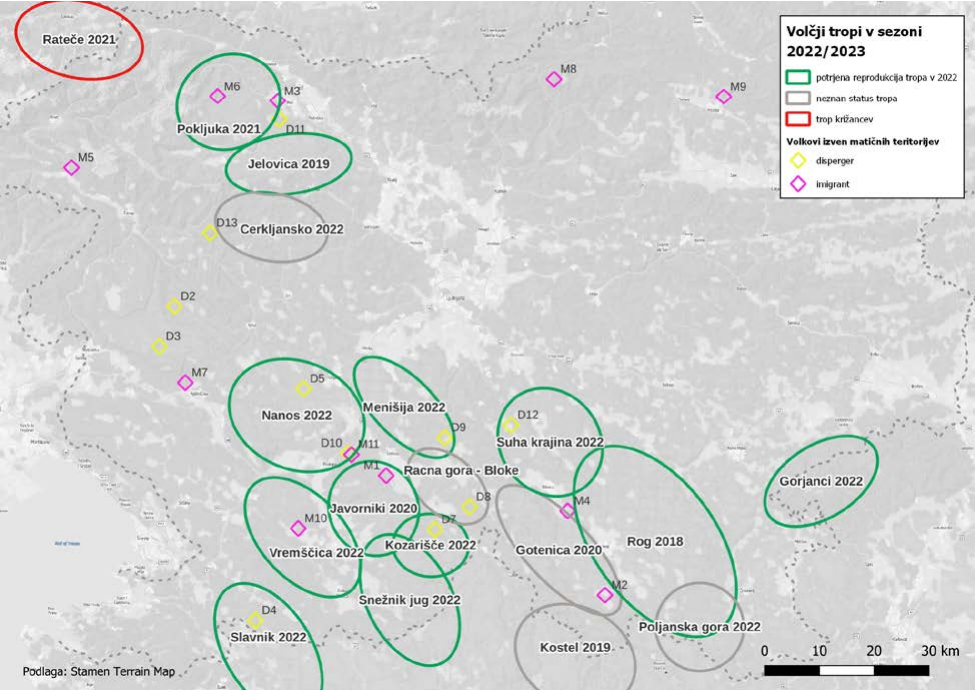
Presence of 17 confirmed wolf packs in Slovenia during the season, plus one pack of wolf-dog hybrids.
-
Of the 17 packs, five were transboundary with Croatia (two of which had their territories primarily in Croatia).
-
Reproduction (litter confirmation) was recorded in 12 of the packs; in the remaining five packs reproductive status could not be determined.
-
Among the reproductive packs: eight had reproduction in previous seasons; four were first-time confirmed in 2022/2023.
Population size and dynamics
-
A total of 118 unique individual wolves were genetically detected (72 males, 46 females) in the super-population.
-
The estimated super-population size was ~ 137 (95% CI: 125–146); after correction the management figure for Slovenia is ~ 117 (107-125) wolves.
-
The number of packs increased (from 12 to 17) compared to the previous monitoring season.
-
However, despite the increase in territorial units, the estimate of overall population size is slightly lower than in 2020/2021—though confidence intervals overlap, so no definitive decline is inferred.
-
The population appears to have reached a stabilisation phase: previous monitoring (since 2010) showed steady growth, but recent years show slowed spatial expansion and numerical increase — likely because optimal territories are saturated and territories are largely occupied.
Hybridisation findings
-
A pack of back-cross hybrids between wolf and domestic dog was detected in the tri-border area of Slovenia/Austria/Italy. The reproductive male in that pack was a first-generation hybrid, with a female wolf from a known wolf pack.
-
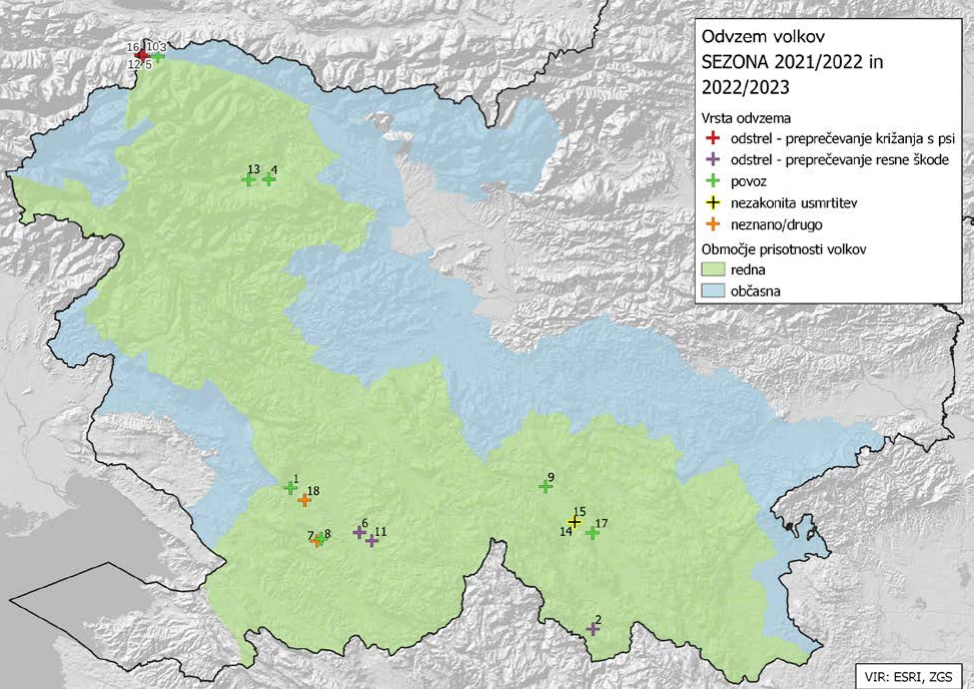
To prevent introgression of dog genes into the wolf population, culling of the hybrids (in the Slovenian part of the territory) was being carried out.
-
Hybridisation continues to be identified as a key conservation concern: the introduction of dog genes is considered a larger threat to wolf genetic integrity than potential errors in culling decisions.
Conservation status and management implications
-
On the basis of the data, the conservation status of wolves in Slovenia is classified as favourable, though with caveats.
-
It is noted that although the population appears stable, the total number of wolves remains relatively small for long-term viability, meaning connectivity with wider Dinaric/Alpine wolf populations (Croatia, Italy, Austria) remains crucial.
-
Illegal killing remains an issue: in the period 1 July 2021–30 June 2023, two illegally killed wolves were documented. Monitoring and telemetry of wolves is recommended to better detect and address such mortalities.
Complete report in Slovenian language is available here: Portal GOV.SI