
DivjaLabs conducts annual genetic analyses of brown bear tissue samples from Croatia to assess effective population size (Ne), a key indicator of long-term population viability. Using advanced DNA genotyping and long-term datasets, the project provides robust insights into genetic diversity and population dynamics of bears in the Dinaric region, supporting science-based wildlife management and conservation.
Introduction
Long-term conservation of large carnivores requires more than estimating how many animals are present in the wild. Equally important is understanding the genetic health of populations, which determines their ability to persist, adapt, and remain viable in the long run.
At DivjaLabs, we have been collaborating for many years with the Faculty of Veterinary Medicine of the University of Zagreb on annual genetic analyses of brown bears (Ursus arctos) in Croatia. Each year, tissue samples from deceased bears are analysed to estimate the effective population size (Ne)—a key population-genetic parameter that reflects how many individuals are effectively contributing genes to the next generation. This project represents a cornerstone of science-based wildlife monitoring and management in the Dinaric region.
From field samples to population-level insights
The project follows a carefully standardised workflow to ensure consistency and comparability across years.
Sample collection and handling
Tissue samples are collected from legally harvested bears and bears that died from other causes. Each sample is preserved in ethanol, uniquely barcoded, and linked to detailed field metadata (location, sex, age when available). This traceability is maintained throughout the entire laboratory process.
DNA extraction and genotyping
High-quality DNA is extracted under controlled laboratory conditions. Bears are genotyped using a panel of microsatellite markers, analysed with modern next-generation sequencing (NGS) techniques and complemented with classical capillary electrophoresis. This approach ensures high accuracy and compatibility with earlier large-scale studies in Croatia, Slovenia, and neighbouring countries.
Population genetic analyses
Genotypes from the current year are combined with data from previous studies spanning more than two decades. Using established population-genetic methods, we estimate:
-
genetic diversity,
-
deviations from population equilibrium,
-
and most importantly, the effective population size (Ne) and its dynamics over time.
Ne is particularly informative because it captures the effects of genetic drift, reproduction patterns, population growth, and gene flow—factors that are not visible from headcounts alone.
Key results in brief
Results from the most recent analyses confirm a generally positive long-term trend in the effective population size of brown bears in Croatia and the wider north-western Dinaric population. Over the last several years, Ne has stabilised at values well above thresholds associated with inbreeding risk, indicating high genetic diversity and good overall population viability.
At the same time, Ne remains below levels considered optimal for preserving genetic diversity over evolutionary timescales, highlighting the continued importance of gene flow between neighbouring bear populations across the Dinaric–Balkan region. Overall, the findings support current management practices and demonstrate the value of continuous genetic monitoring as a cost-effective, sensitive tool for population assessment.
Learn More
This project illustrates how applied genetics can directly support wildlife conservation and management. If you are interested in genetic monitoring of wildlife populations, effective population size estimation, or long-term conservation genetics projects, we would be happy to discuss our work and potential collaborations.
Contact DivjaLabs to learn more about this project or our broader expertise in wildlife genetics and population monitoring.
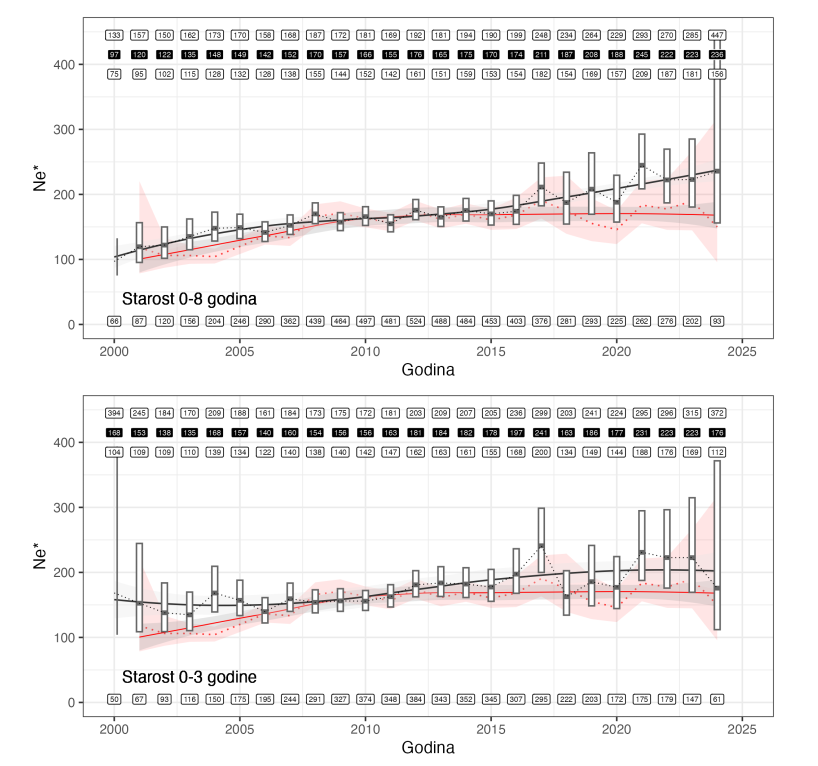
Long-term dynamics of effective population size (Ne) of brown bears in Croatia (black) and in the combined Croatian–Slovenian population (red), estimated from genetic data for two age classes (0–8 years and 0–3 years), showing an overall positive trend with recent stabilisation.