The 2023 genetic monitoring of brown bears in Slovenia, utilizing extensive non-invasive DNA sampling analysed by DivjaLabs, estimated a highly precise minimum autumn population of 737 individuals. Although the population has grown linearly over the past two decades and is slowly expanding its spatial range, current science-based management strategies aim to stabilize the numbers to ensure long-term human-bear coexistence.
Effective conservation of large carnivores requires reliable, science-based data. The recently released report on the 2023 brown bear genetic monitoring in Slovenia highlights a thriving population. DivjaLabs is proud to have led the genetic and molecular analysis for this massive collaborative conservation effort. The project was coordinated by the Slovenia Forest Service and commissioned by the Ministry of Natural Resources and Spatial Planning.
The 2023 monitoring results: A thriving population
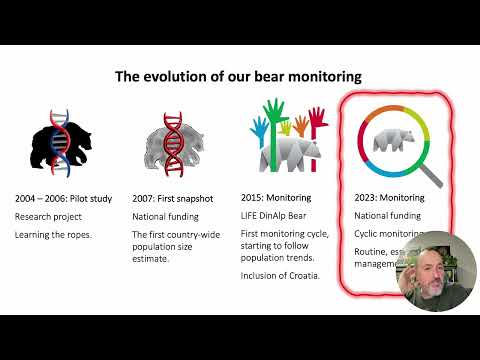
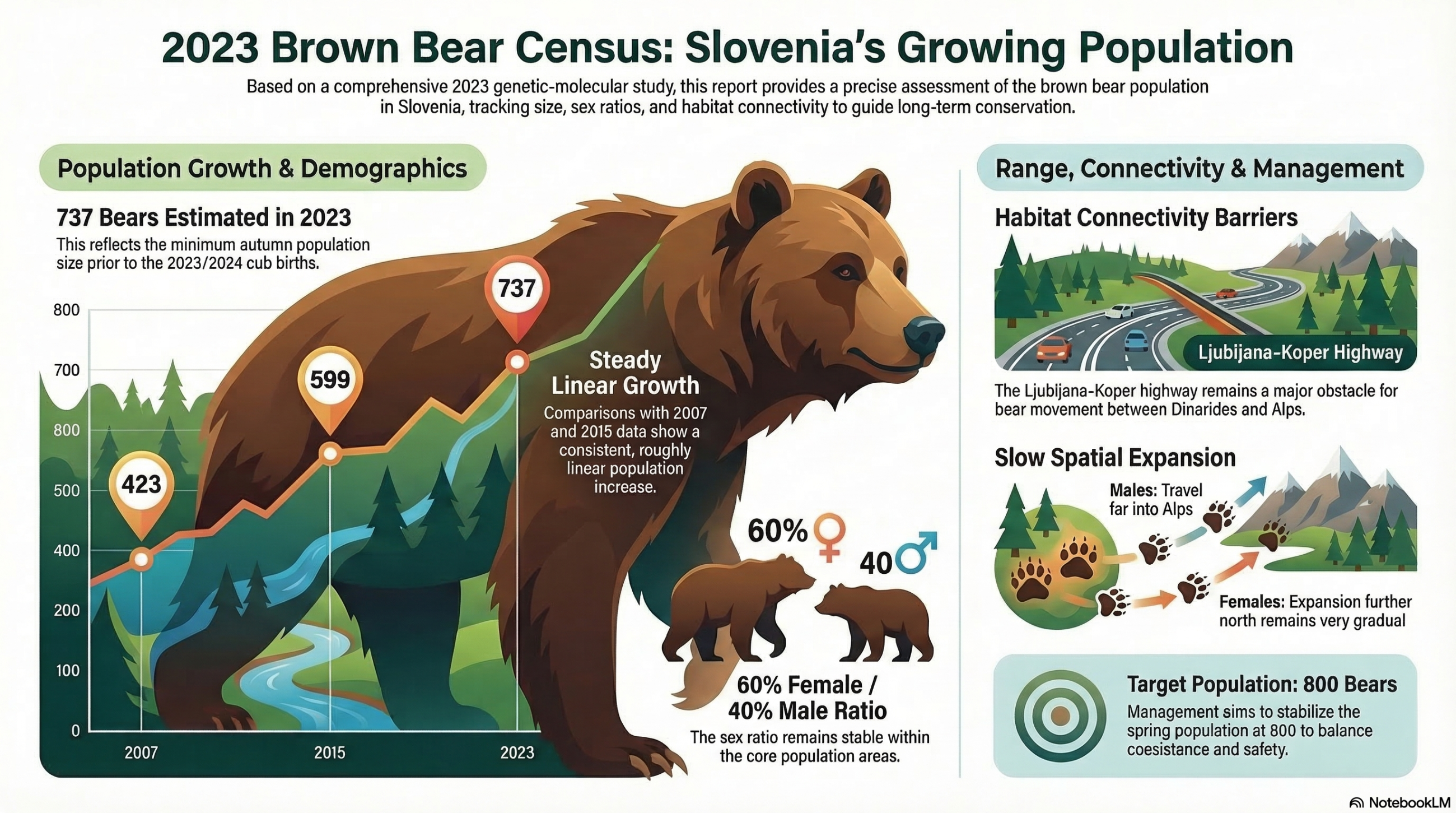
The latest genetic census provided a highly precise estimate of the Slovenian brown bear population. The study revealed a minimum autumn population size of 737 brown bears (95% confidence interval: 695–797). When compared to previous genetic censuses conducted in 2007 and 2015, the data shows that the population has grown linearly over the past two decades.
Spatially, the bears are continuing to expand their range toward the north and west into the Alps. However, the genetic data clearly highlighted that the Ljubljana–Koper highway acts as a significant barrier to their movement, restricting gene flow between the Dinaric and Alpine regions.
Despite these infrastructure challenges, the population has been carefully managed in recent years to balance a healthy bear population with the region’s social carrying capacity. Thanks to this rigorous, data-informed stewardship, the conservation status of the brown bear in Slovenia remains favourable.
How we did it: DivjaLabs’ role in genetic monitoring
Tracking elusive animals across vast landscapes is notoriously difficult, which is why non-invasive genetic monitoring has become the gold standard for brown bear population monitoring. During the autumn of 2023, a vast network of over 960 volunteers, hunters, and forestry professionals collected nearly 2,900 non-invasive samples (primarily scats) across the bear’s habitat.
To ensure smooth sample collection and high quality of field data, DivjaLabs supplied the sampling materials and instructions for this massive effort. We prepared custom kits containing collection tubes with DET preservation buffer, swabs, pre-paid return envelopes, and clear, graphic brochures on how to properly collect the samples. We also prepared a video instruction on how to use the kit.
Once collected, we handled the complex task of turning these samples into actionable insights:
- High-volume processing: We processed and analysed 2,500 genetic samples in our specialized non-invasive DNA laboratory.
- Advanced genotyping: Utilizing state-of-the-art Next-Generation Sequencing (NGS), we amplified 13 microsatellite markers alongside a sex-identification marker.
- Accurate identification: This high-resolution genotyping allowed us to reliably identify 656 distinct individual bears directly from the degraded DNA found in scats.
- Population modelling: By applying advanced Capture-Mark-Recapture (CMR) statistical modelling to these genetic “fingerprints,” we generated the highly accurate abundance estimates that wildlife authorities rely on.
- Reporting: We submitted the final report on genetic brown bear population size estimate in November 2024.
Bring brown bear genetic monitoring to your region
The success of the Slovenian monitoring program proves that brown bear genetic monitoring is no longer just a niche scientific tool—it is the practical backbone of effective wildlife management.
At DivjaLabs, we provide complete, end-to-end solutions for biodiversity monitoring: from study design and custom DNA sampling kits, to cutting-edge laboratory extraction, genotyping, and complex bioinformatic data analysis.
Our team is currently analysing non-invasive samples for the national brown bear monitoring programs in both Croatia and Bulgaria.
Are you managing a wildlife population and need reliable abundance estimates? Let’s discuss how our molecular and computational tools can support your conservation goals.
Read the full Slovenian brown bear monitoring report here: https://www.gov.si/assets/ministrstva/MNVP/Dokumenti/Narava/Velike-zveri/Monitoring_medveda_2023.pdf
✉️ Contact us: info@divjalabs.com
Video instructions for sample collection
Lecture "20 years of brown bear monitoring in Slovenia" by Tomaž Skrbinšek